AI Search Is Changing SEO: What Cape Cod Businesses Need to Know in 2026
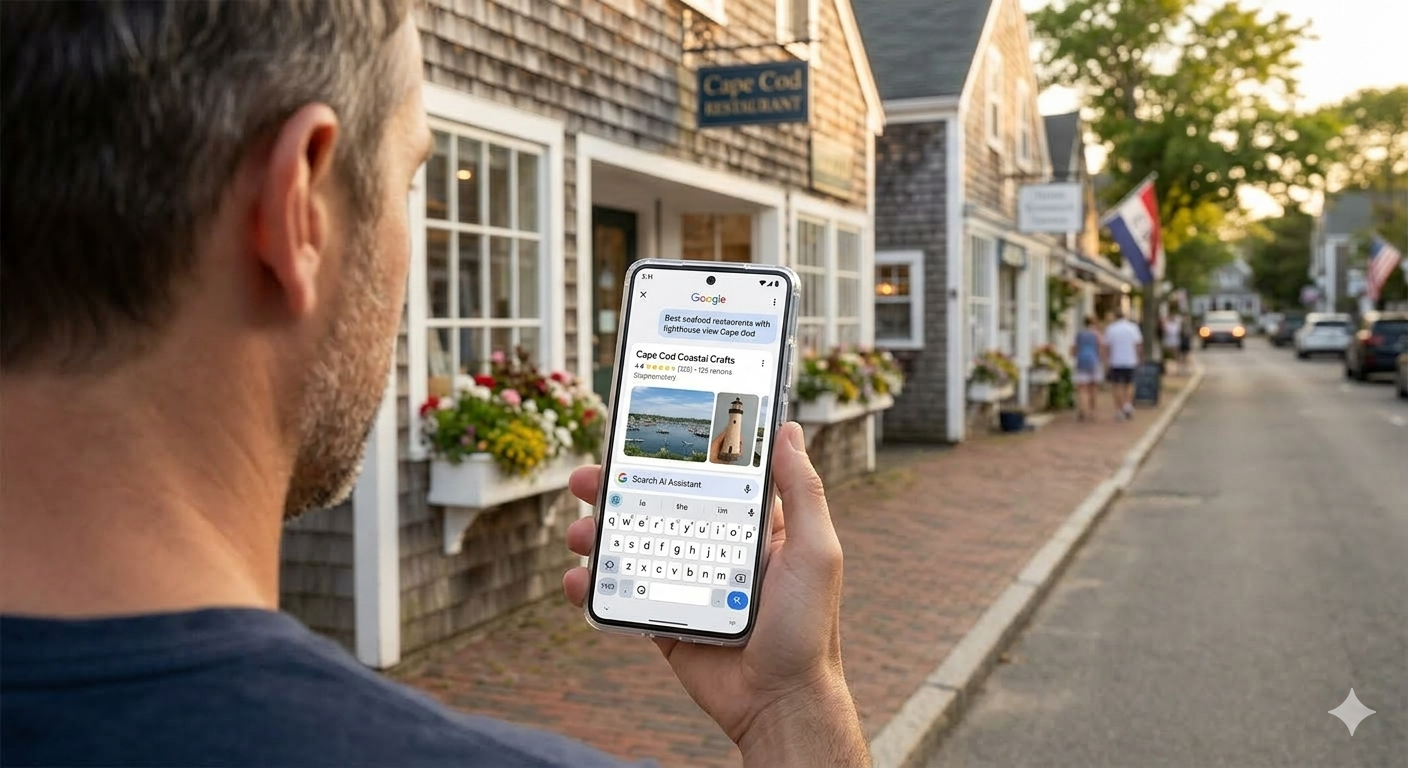
Search is changing faster than it has in decades, and if you haven't noticed yet, you will soon.
Not long ago, getting found online meant stuffing the right keywords onto your website and hoping Google sent traffic your way. That approach still has its place, but the rules of discovery are shifting underneath our feet. More people are turning to AI-powered assistants to find answers, recommendations, and local services. Instead of scanning a page of blue links, they're asking a question and getting a direct answer back.
For Cape Cod businesses, this shift isn't something to worry about down the road. It's happening right now.
From Keywords to Conversations
Traditional search was built on matching phrases. You typed "Cape Cod plumber," and Google returned a list of results based largely on who had optimized for that term.
AI search works differently. These tools analyze intent and context, reading entire websites to determine which businesses genuinely answer what someone is looking for. When a visitor asks an AI assistant something like "Who installs energy-efficient HVAC systems on Cape Cod?" the response isn't ten blue links. It's a short, confident recommendation of two or three businesses that clearly fit the bill.
If your website explains what you do, where you do it, and who you serve, clearly and specifically, you're far more likely to be one of them. If it doesn't, even a well-established, well-loved local business can become effectively invisible in AI-driven search results.
Why Clarity Is Now Your Most Important SEO Asset
AI tools don't guess. They scan, interpret, and summarize based on what's actually on your website. That means the businesses that communicate clearly will win, and the ones with vague, outdated, or disorganized sites will quietly fall behind.
Here's what AI search systems pay attention to:
Clear service descriptions. The moment someone, or something, lands on your site, it should be immediately obvious what you offer. Not buried in paragraph three. Not hidden behind clever branding. Right up front, in plain language.
Structured data and schema. These are behind-the-scenes signals that help search systems interpret specific details about your business, your services, location, hours, and reviews. If your website developer hasn't addressed this, it's worth a conversation.
Accurate and consistent local information. Your business name, address, phone number, and service area should match across your website, Google profile, and any other directory where you appear. Inconsistencies create doubt, for both AI tools and the people using them.
Logical site structure. Organized pages, clear navigation, and content that flows naturally make it easier for AI to analyze and summarize what your business offers. A cluttered, confusing website sends the wrong signal.
Frictionless Websites Win
There's another dimension to AI search that doesn't get talked about enough: user behavior. AI tools increasingly favor websites that guide visitors quickly and effortlessly toward what they need. In other words, once someone lands on your site, it should be obvious what to do next.
That means:
A clear, prominent call to action on every key page
Simple navigation that doesn't make people think too hard
Fast loading speeds, especially on mobile
Easy-to-find contact information
When visitors move smoothly through your site and find what they're looking for, engagement improves. And that positive behavior sends a signal to search platforms and AI tools alike that your site is worth recommending.
What This Means for Cape Cod Businesses Specifically
Cape Cod has always run on relationships. Word-of-mouth, referrals, and a strong local reputation have driven business here for generations. That hasn't changed. What has changed is where those recommendations now begin.
When someone planning a trip to the Cape, or a year-round resident with a leaky roof, asks an AI assistant for help, that assistant may scan dozens of websites in seconds before surfacing a handful of names. The businesses that show up won't necessarily be the oldest or the most established. They'll be the ones with the clearest messaging, the most helpful content, and the most organized online presence.
Whether you're a contractor in Barnstable, a restaurant in Chatham, or a boutique on Main Street in Falmouth, the question is the same: when an AI tool reads your website, does it understand exactly who you are, what you offer, and why someone should choose you?
The Takeaway
AI search isn't replacing traditional SEO; it's evolving it. The businesses that thrive in this next phase won't be the ones chasing algorithm tricks. They'll be the ones that made their websites genuinely useful: clear, organized, fast, and honest about what they offer.
On Cape Cod, where a single season can carry the weight of an entire year, showing up in the right search result at the right moment isn't a nice-to-have. It's the kind of competitive edge that quietly separates the businesses people find from the ones they never knew existed.
Stay Ahead This Season
The way customers find local businesses is changing fast, and staying informed is half the battle. If you found this useful, there's more where that came from.
Have questions about how this applies to your specific business? We'd love to talk. Fill out our contact form and let’s chat.